Outsider Art
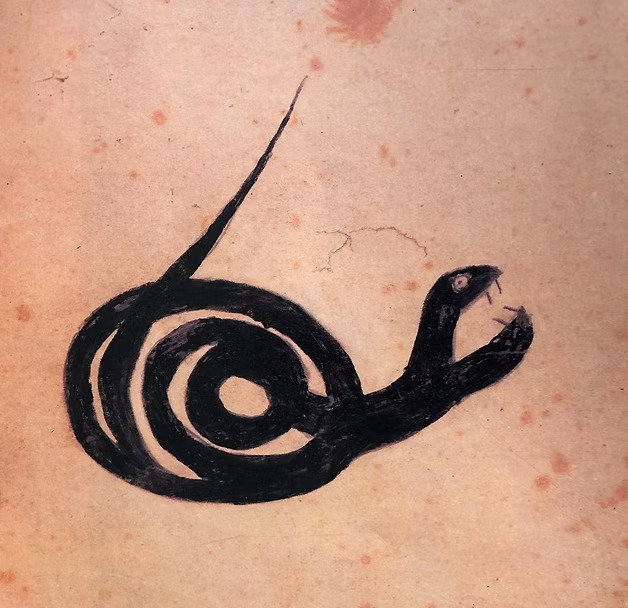
Bill Traylor came up in conversation recently. I consider him to be one of the finest artists humanity has produced. I already hate that sentence so so much but here we are. His story is perfect. If Ryan Coogler invented an early 20th century folk artist he wouldn't come up with a better story. Traylor was born a slave and lived most of his life as a free sharecropper in Alabama. He didn’t start working until the end of his life and only spent 3 years producing art. He had essentially one patron who encouraged him and gave him art supplies. Don’t worry about him, he was some white dude. But good on him I guess, it’s likely we have as much work as we do because of him. But anyway, BILL. Fuck the story. Just look at the work. Whatever materials on whatever materials. Like crayon on newspaper. Pencil on cardboard box. The art was there and needed to get out. Medium doesn’t matter. Folk art fucking wet dream. And the shits amazing. Dude has like 1500 works and invented an entire genre and aesthetic in those pieces. That's like two a day until he died. Its so simplistic and yet so recognizable. Also so easy to fake but fuck those pieces of shit. 1500 works and yet there are a bunch available at every major art show and online, yeah I’m sure they’re totallllllly legit.. Gross, but that doesn’t matter here.
What I want to focus on isn’t Traylors genius. That’s been discussed. Not the fact that some white guy probably had a heavy hand in his production. That’s been discussed. Not the fakes, not the influence. I wanna focus on why the fuck some of us like outsider art so much. Why the story matters. Look at his body of work and it's stunning. Now tell me a black slave with gangrene made it, holy shit. What is that? Why is that better or more interesting or more meaningful or truer. I want to investigate in myself why outsider art feels like it touches something extra. In my very first thoughts about this that got me reflecting on whether this attraction to folk art is problematic, I focused primarily on the potential othering of outsider artists. I am not an artist. I have studied most major medias in studio and academic settings in order to gain an understanding of how. I get how sculpting and painting and print making and drawing and whatnot work. I get what they are, how they operate, how they can be used, the history, how some folks have toyed and manipulated them. I get standard Art School Art pretty well. I love it, it's our crowning achievement as humans besides wildlife preserves and national parks. But folk art, outsider art. That's the real shit, the dirty shit, the stuff that makes me think humans need to do this. Not just trust fund brats with nothing to actually work for. And that's fine, I wish I was that. But that autistic kid that started painting unreasonably tall stacks of pancakes because he fucking loves pancakes more than life. That's the real shit.
But why?
Why is that good or better or realer. My initial thought is that it's tapping into something I don’t understand but is still the human experience. That’s what folk art is when I shut my brain off. I am a privileged white kid with a silly amount of education. Nothing has been especially easy but it’s been pretty fucking far from hard. And I can’t access art. It totally eludes me. I can’t even begin to make it. I have nothing that is trying to get out of me so hard that I just make it happen. And I’ve given myself enough training that I have perhaps crippled myself. I’ve made myself a proper renaissance man with art in that I am an expert of nothing but have working knowledge of almost everything. But zero confidence in any of it. So what do I do with that? Absolutely nothing. I admire everyone who has ever tried. Radically criticized those who have wasted their talent, but never deny that they tried. Because that’s the first step right, try. Bill didn’t try until he was 85. I will never deny the effort, the patience, the attempt. But it can fail, it usually does. And that’s fine.
But when someone studies, learns, tries, has guidance, keeps trying, has the freedom to fail and keep going, amazing things happen. Standard art happens. It's fantastic. It's why I'm not 100% anti human. The best of it is the best we’ve ever done as a species. We have such a rich history to build off of. There were medias that were mastered 2000 years ago that were lost for a millenia that then were rediscovered and built on and over. Spectacular. I could talk about glass and its history until you threw an empty beer glass at me to get me to shut up. But this Bill Traylor shit. Outsider art. What’s it building off of? What’s it referencing? The answer that seems the most accurate is so damn hokey. Life? Isn’t that the point? Existence is what serves as the aesthetic basis? He didn’t draw to make money. He didn’t draw to get laid. He didn’t draw to get into Art Basel. He didn’t draw to fill the void of late stage capitalism. He drew because he wanted to draw. The cute story is something inside him wanted to get out in the most beautiful way. I want that to be real but we can never know.
But the thing I really want to investigate in myself is why is he is more interesting than most. His aesthetic is undeniable, and should not be denied. But why are these outsider artists so attractive. His brain is not mine. I have a white, educated, middleish class, medium autistic brain. That is my experience. What does a barely functioning Down syndrome woman’s brain make? What does a traumatic brain injury mind make? What does as 85yo slave’s brain make? I want these answers badly. I have pursued and investigated them at length. But why? Why is this more interesting to me? Is that ok? Their experiences are not my own in almost any way, and this art that must escape them seems to be a way in which i can access that. But should I? Am I allowed into that? Have I fetishized any experience that isn’t my own? I have the means and ability to make almost any art I wish and I don’t even begin to try. I think that motivation is what I am after. Why start? To what end? What it achieves for the maker when all the previously stated motivations are removed is the crux. Why did you need to make that? But that feels tied to the outsiderness. The injury, the developmental problems, the history. These factor into all parts of our lives of course, but the fact that these cannot be removed from the person creating the art and thus the motivation feels like such a troublesome fetishizing of that source. This individual is accessing art from a place that I do not have access to. I am not sure but I think that might be some of the interest for me. The art that they seemed compelled to make somehow allows me access to that place. And perhaps this is the purpose of art and the great work that it is capable of doing. But I am worried that my own specific interest in outsider art is an interest in accessing a place that I reasonably should not be allowed access to. I cannot and never will understand an enslaved life. I cannot and never will understand the life of someone who is not a mostly functioning white straight male. That is not unique but also not unusual and widely talked about. People more like me have made most of the canonical art so I think our perspective is solidly understood. I do want to know what else is out there. Is that ok? Is the motivation on Traylor's part to get these images down on paper enough for me to be allowed access into experiencing it? It seems to me that the very best versions of outsider art remove the market and audience from the creation of the art. Traylor would have made the work no matter what. Maybe white guy gave him a few resources and motivation but he was doing the work anyway. So why am I allowed to participate? What does it mean that I want to? This wasn’t for me. It unlocks myriad feelings in me and I would guess that if I could go back 80 years and tell Bill how wonderful his works are he would appreciate that but that doesn't seem to be the purpose of making it. In the best case I feel like I am allowed access to a world that I cannot imagine and should not have access to. And in the worst case I feel like I am allowed access to a world that I cannot imagine and should not have access to.
Human Material
One of the components of my line of work that I spend the most time thinking about is ownership. The desire to own, the motivation to own, the decision to own. What gets collected, what gets hoarded, what gets used, what gets replaced. So much of the material I deal in is made to be owned and used and traded if necessary. Lamps and rugs and paintings and trinkets and dumb shit that is either of use or represents a time or place or relationship. Decorative objects that are directly made to be consumed. There is zero to be discussed here about ownership or appropriation. However so many of the most interesting things rest in the grey or jet black areas of ownership. Sometimes it's easy. I’ve had customers ask me if it's okay for them to wear native american made turquoise. What a wonderful question and the fact that it’s even being considered puts them light years above most folks. But to be frank, the vast majority of native american jewelry is made for the resale market. This was not obviously always the case, and pieces made for ceremonial use are vastly more expensive and valued, though I would argue those pieces do start to fall into the grey area of appropriateness for ownership. But I cannot exaggerate how many times I have directly said to a customer, this was made for white people, so buy it, own it, wear it, and enjoy it. This is maybe one of the more complicated but also straightforward examples of what I’m getting after. NA jewelry made ceremonial or for use within the community should absolutely be preserved for use and appreciation within the community. There is no reason for any white person to own an early squash blossom necklace that was made to be a symbol of wealth for a chieftain. But one made in the 1940s to be sold to tourists on the train lines: have at it. I am oversimplifying a very complicated topic for the sake of a different argument and I apologize for that, but this is the best correlation I can think of, and I think the comparison of agency is useful.
I could list off a thousand examples of things that are similarly a mixed bag of some versions should be left to the groups that use and cherish the things, and the bits that are made for tourists or market or whatever are fine, African Art comes to mind immediately, but there is one thing that always comes to mind first: human remains. Few things are more fraught, divisive, complicated, and worth talking about.
Of course the first thing that ever comes up with human material is legality. How is this legal to own and trade?? For a long time that was a relatively easy question to answer, the federal government has basically no rules about human material unless it was living or indigenous, and only three states outlawed the trade. But as always, free market dynamics dictate that if it is possible to take advantage of a situation, it must be taken advantage of.
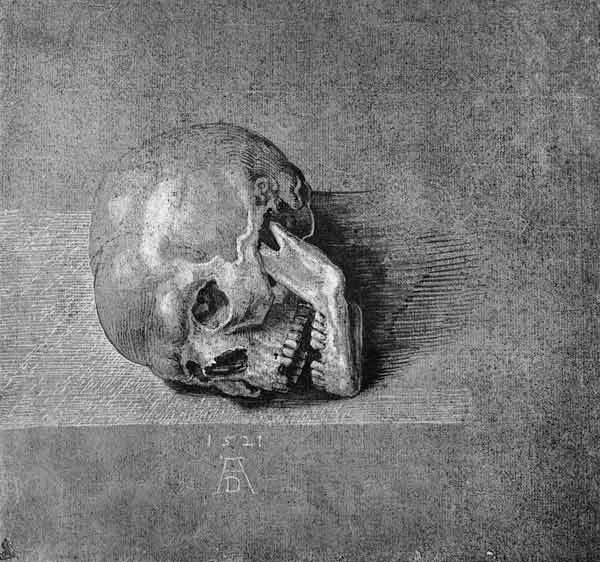
But we should back up a little bit. The second question that comes up when a customer sees a skull or skeleton for sale is where did it come from. This is an overly simple question and when I have the energy I force the harder question: where did the current owner of this skull acquire it, or where did THIS SKULL come from, originally. This follow up generally and reasonably horrifies most folks as they are immediately forced to reckon with the fact that this is part of what was once a living human being with a name and family and friends and a life. This was life, a life. So the more likely question of how did you come to own a human skull pivots to the violent and dangerous question of why did this human’s skull get processed and preserved and is now available to be traded. This is not an easy question to answer and the most likely solution has changed over time. 19th century human material largely came from poor folks in Europe. Police officers would sell the corpses of drunks and poor folks to hospitals and universities. Wildly sketchy and problematic and a practice that continued for decades. In the 1940s a professor “found” a “source” for human material that built a business that lasted into the 1970s. This source was the Ganges RIver, where Indian poor folks could not afford to have their bodies processed in a respectful way. The bodies would get dumped, British fuck face would fish them out and process them into skulls and skeletons. In the later 20th century international human rights groups started getting into places other than whitesville and that practice stopped. However around that time China was gaining power and prominence but was still a communist system that could allow, cover, and work around just about anything. Prison labor offered an abundance of human material with a much easier to approach moral conundrum. They were prisoners so who cares. For several decades that became the main and efficient and cheap source for human material. A major international exhibit was produced that was born directly from this material: Bodies. It was everywhere, it was in a damn James Bond movie. After traveling everywhere and making a ton of money it came under scrutiny finally when someone finally asked how all these human bodies came to be available for an “art” project. Fucking the problematic part of “communism” is how. Nothing was really done until the 2008 Beijing Olympics when China had to actually address the fact that virtually the entire world disagreed with the practice of harvesting human material from dead prisoners because they weren’t really people. In 2008 as a direct result the price of human material drastically rose. A skull went from $750 to $1500 overnight. Markets shift constantly but this was very fast and very direct. Tradeable human material was now almost exclusively available on the resale market. Free market economics being what they are, people found a way to gain new product. A morgue worker stole bodies out of freezing in New England. Several states tightened up their control. Very recently a crazy person started digging up bodies out of a cemetery. More states will follow and federal mandates may come. I am in favor of these changes. I think there should be more regulation over anything that was once alive but I think antique items should have some exemption if proof of age can be made. But the important thing to examine is that people want to own human parts, humans will go to weird lengths to own human parts, and humans will take advantage of every way to work around the legality of owning and trading human parts.
So why is this never the first question. Why do we beat around the bush so much in this one area? The question of can I do this immediately pops up, but the question of should I do this is so much harder and weirder and more complicated.
I rarely consider legality in buying an item besides the ability to resell. If it's beautiful and special there is a market and I can maybe find it. But I buy to resell. And I have to be okay with profiting off that item. Hence I don’t buy nazi shit or kkk shit or blackface shit etc. I can’t sit with making money off of that. Human material becomes so complicated in this way. To me the main question is agency. In the way that NA jewelry that was made for culture import does not have the agency to stay within the community because it is an object, when a human dies and their skull is all that physically remains, it no longer has the agency to determine what is done with it. But it was and is a human and so this agency is paramount to me. There is almost no world in which we can know the agency of this PERSON. If a necklace was made to be a signifier of wealth and unity between two groups it should remain as that. If that type became a desirable object to the point of being made for trade outside the cultural group in which it had existential value, so be it, that is up to that group. But to actively take something from a human without their agency or consent is absolutely violent. And participating in that market directly participates in that violence.
So back to human material. We know that virtually all available human material that has been used in medical preparations was taken from the Ganges River or was Chinese prison labor, neither party has any agency in the future use of their bodies. Ancient examples have similar complications. Even if the person agreed to the preservation of their body, either by ritual mummification or any number of other means, the purpose was to stay in that state of preservation, either as ritual or for some spiritual reason. Taking that material disturbs that service and thus removal also removes the agency of that individual. Also it's just gross and mean. The closest I have been able to come to a piece of human that is meaningfully preserved and could potentially be traded with agency and consent of that person is buddhist monk bones. On some occasions monks would allow their skeletons to be carved into prayer beads and ritualistic vessels, but theoretically by use by future monks. I have not directly discussed this practice with any monks but I would like to, to better understand their use of these items and their thoughts on the trade of them. I do currently own one that I bought mislabeled as a folk art skull carving. I have held on to it partly to keep it out of the hands of anyone who doesn’t know or appreciate what it is, but also in the traditional memento mori sense, but in this case extending to the trade of such items. I want to have to think about what this means and what everything I buy and sell means for all parties involved.
So when customers ask where a skull comes from I tend to give them the full answer when I have the time. I want them to understand when they buy human material that they are signing up for owning a piece of a human without that person's consent or agency. I do not judge them but they should know that and be able to sit well with it. Is whatever you’re getting from owning this worth that knowledge? Can you accept that this person's skull lives with you now and they do not know that and almost certainly did not want that to be the case? Many folks who are wanting to own these sorts of things will quickly say that they would be happy for their body to be preserved and appreciated after they’re dead and that is fine, but it is impossible to know that about the dead. They can no longer speak for themselves, and based on the source for the vast majority of human material it is wildly unlikely that they would sign off on this. We cannot know, but this lack of a solid footing should be a non starter for most, and at absolute minimum the most important consideration in the choice to own human material.
This is a topic I am and will always be interested in a thinking about. I have by no means reached any sort of conclusion, but I think it is essential to think this way about materials that have a deeper layer of meaning and history and importance. If you ever meet me in the real world I would be happy to talk about this at length, just buy me a beer first. Like a human.

Swastikas
It all begins with an idea.
I began collecting swastikas when I came across a good luck token from around 1920 or so that featured a swami figure looking into a crystal ball with the words, “Good Luck Will Accompany the Bearer” stamped underneath. In the center of the crystal ball was a very clearly stamped swastika. The verso depicts a large eye reading, “The All Seeing Eye Guards You From All” surrounded by a horseshoe, wishbone, rabbit’s foot, elephant, heart and key, four-leafed clover, and another swastika; ostensibly all common and popular symbols of good luck and protection.
I was of course aware of the use of the swastika outside of the modern west, Hindu usage is generally the first touchstone, but the Greek meander is effectively a repeating pattern of swastikas. There is also a robust tradition of swastikas in indigenous Northern American visual culture, most commonly Navajo and Zuni, where it’s called a whirling log. I’m sure I’m butchering the origin story but in the Navajo tradition it’s something along the lines of a traveler was given a log by the gods to help in his travels and he eventually goes through many tribulations and learns a lot of important things and finds a whirling cross with yeis on each point. The symbol becomes a common motif in sand paintings and eventually makes its way into rugs and jewelry, etc. In response to Hitler’s regime, it also dies out in Native American culture in the 1930s (outside of ceremonial use).
But this was my first encounter with an apparently modern, western use of a swastika (hopefully) outside of the Third Reich. This immediately opened up for the wide world of good luck swastikas that was wildly common in the US and England prior to the 1930s. The massively widespread use of the symbol in almost every culture prior to the 1930s is overwhelming. As far as historians can tell the earliest use is at least 4000 BCE in India, though it’s likely to be earlier. It appears in the visual culture of almost every civilization, though as a major motif it is most common in Indian cultures, Northern American indigenous cultures, and after the late 19th century, American good luck culture. It is quite difficult to draw any straight lines to how and why the swastika erupted as a good luck symbol in the United States but it does seem to be linked to its use in Native American culture. The swastika appears in American advertisements, in postcards, in novelties, as sports emblems, as architectural adornments, absolutely everywhere. I have owned trivets, car hardware, blade hones, silverware, blankets, jewelry, postcards, stationary, coins, and so many other things all adorned clearly and explicitly with swastikas.
Much of it’s ubiquity can be attributed to how instantly recognizable it is. It is clear, it is repeatable, it can be stretched and manipulated and still be immediately clear. It can be the border of a postcard, or the shape of a watch fob and it’s still absolutely certain what the symbol is. That is powerful and valuable from a design standpoint. Hitler was a garbage human but he was not stupid or ineffective, and his choice of this symbol was obviously powerful and effective as well.
I choose to refrain from using names here but I had a very interesting experience with selling one of my pre-Nazi swastika items at an antique show several years ago. This was a very focused show featuring all very smart, experienced dealers serving a very specific, careful audience. One of my objects was a circa 1900 cattle brand from a many generation Texas family which featured a swastika as the brand. I was confident in the object's history and I had evidence of the swastika being a known brand in Texas around 1900. The show runner loved the object in this context and I was confident of both the other dealer’s and the audience understanding it’s context and why I found the brand so interesting. The legacy of the Third Reich is so powerful that it is reasonable to believe that human beings were branded like livestock. There is no evidence of this happening specifically, but generally most people’s reaction to this object is along these lines. But the reality of the object as a piece of Texas history with a very common good luck symbol of the era is hard to square with such an extreme reaction, even when the obviousness of the reality of the brand is made clear. That is the power of this object, that is why it fascinates me and why I stand by it as a powerful and captivating thing. One of the dealer’s next to me inquired about it on the second day of the show. He is far older than me and very respected and experienced in this field. He is also Jewish. He expressed horror in the item and questioned it being unrelated to the Nazis. I assured him of its history and its provenance and why that context made it more interesting and powerful. Despite this, he focused on his negative reaction and did not allow the power of that reaction to be contextualized and insisted I remove the item from the show. I did so, as I did not care to make anyone uncomfortable with any of my things (it’s just an antique show), but did point out that while my item was completely unassociated with bigotry or hate or human violence, he in fact had a sign reading “Gypsy Camp”, a term which in any context is a racial slur, and is in any context tied to bigotry and hatred.
I was very surprised by this interaction and very dismayed. I want to interact with the messy parts of history. I like buying pretty stuff. I like buying valuable stuff. I like buying weird folk art that has zero historical and cultural imperative. But I also really like buying stuff that has emotional impact, historical relevance. I like buying letters from soldiers complaining about how miserable they are. I like buying depression era advertisements decrying the evils of credit. I want objects that are able to make people feel things viscerally. That was the whole point of this cattle brand, and the fact that that was missed by one of the leading deals in my arena horrified me. I have fully come to terms with that, but it made me want to investigate further the outer reaches of collecting. The motivations in owning things. The motivations in amassing collections. Why this thing? Why 800 of them? Why all of them? Why every variation of them? Why this thing that is violent? Why this thing makes some people think and other people run? I collected swastikas because they explored all these questions for me. I learned a lot about history when I first bought that token, I dove deep and found a lot. The swastika became a symbol of that for me. It ties directly to so many areas of interest for me: luck, history, interpretation, cultural changes over time. I’ve since released most of my collection as amassing these things did little for me over time and it became taxing to have to explain it to new visitors of my home. I have retained a few choice pieces, some odd folk art examples, some particularly potent postcards, and of course the now very worn down good luck token that started it.